
Delving Deep Inside the Bunker Talks with Evelyn Pratt
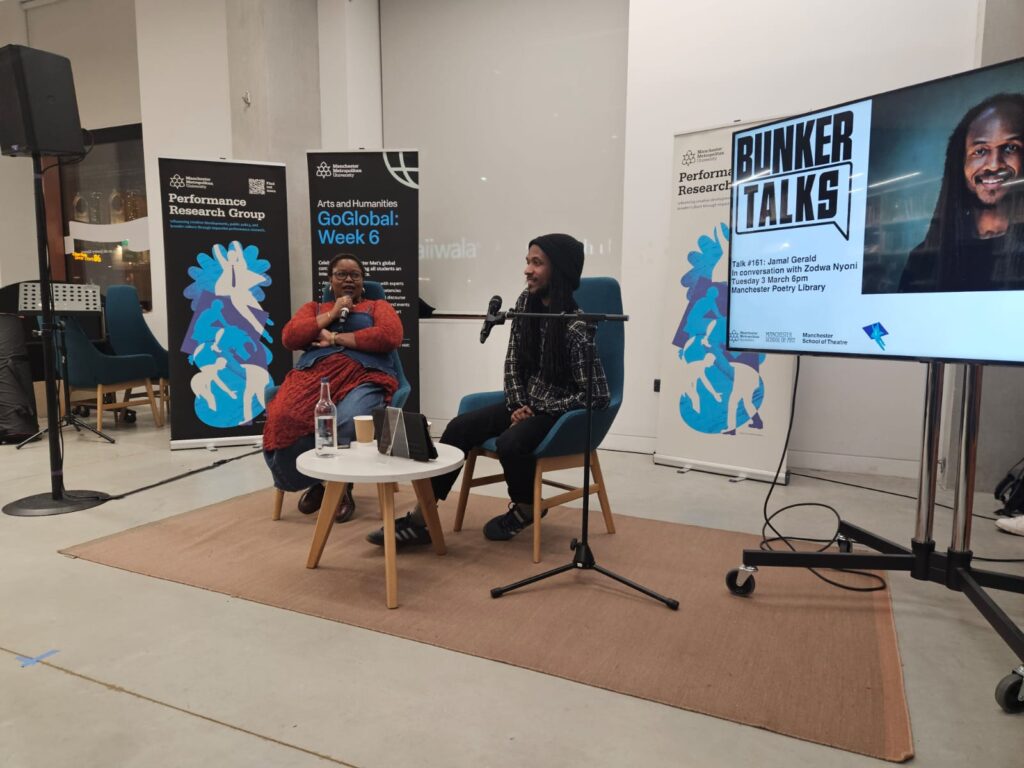
Bunker Talks invite artists and researchers to talk about who they are, what they do, and how they got to where they are now. The series began in 2020, since then there has been 163 talks.
But what does it look like to work on the talks and what goes on behind the scenes? We delve into it with recent Performance Research Group graduate intern, Evelyn.
Introducing Evelyn
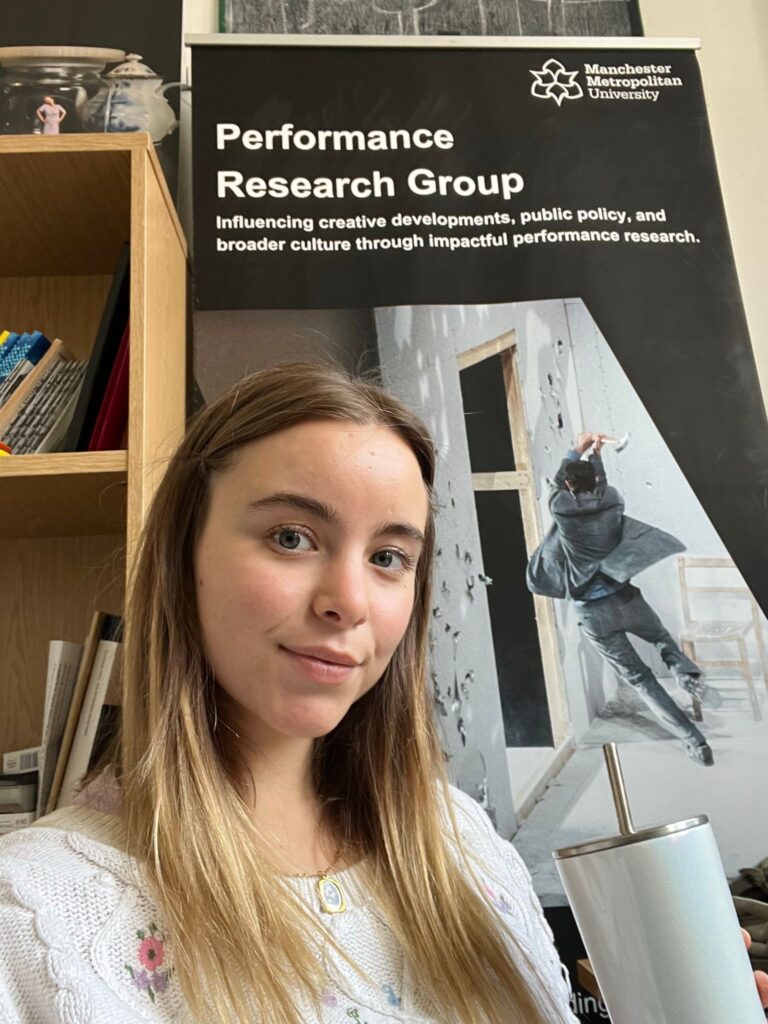
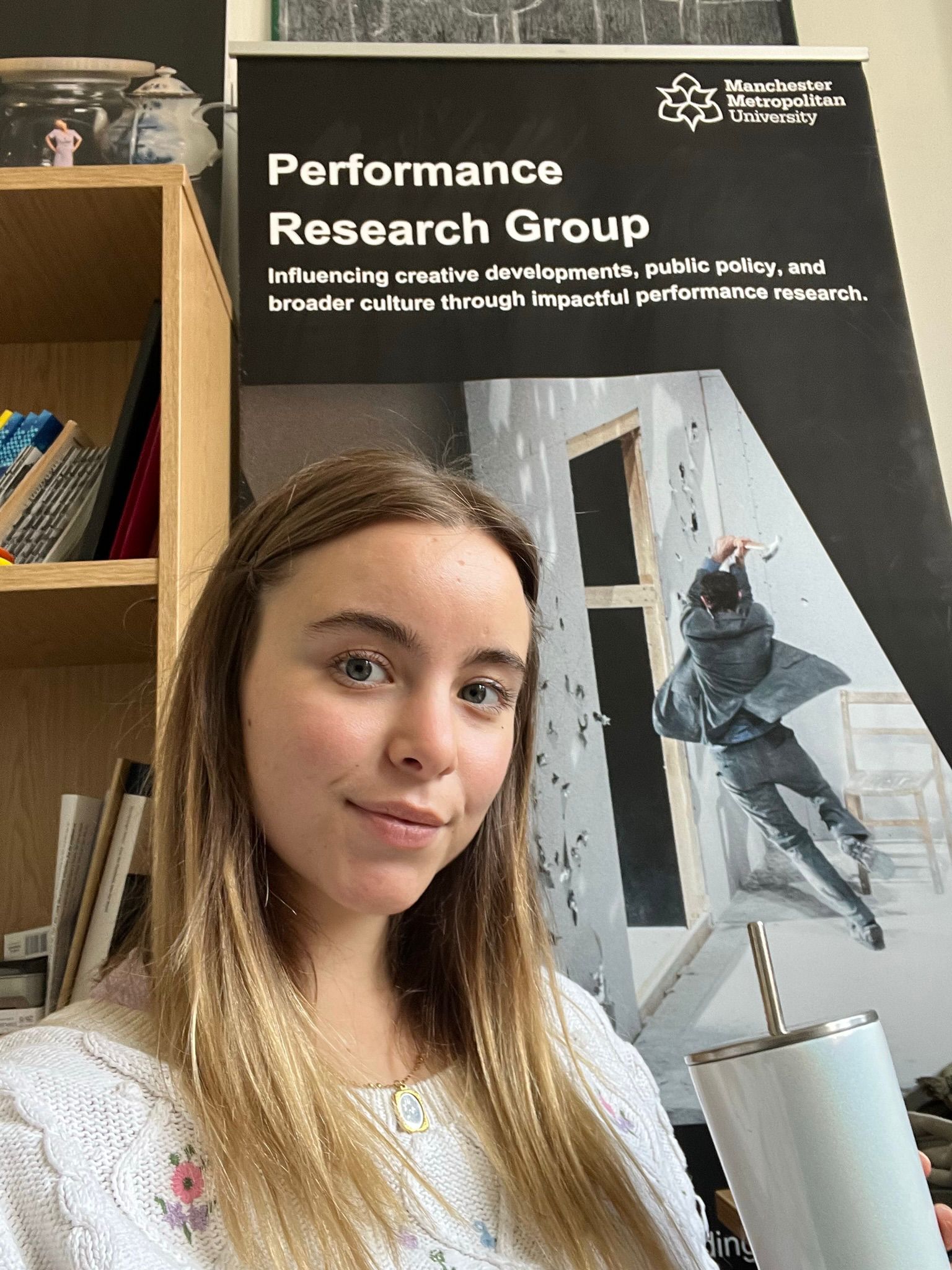
Evelyn Pratt is a neurodiverse and emotionally dysregulated theatre maker-performer, from the 95% white, Anglo-Saxon town, Tamworth, and she is currently based in Manchester.
She is a recent graduate from Manchester School of Theatre’s Drama and Contemporary Performance undergrad, and is currently enrolled in their MA Performance programme.
Her show, Doyo Uwan Tacu Poft Ea?, co-devised with theatre fiancé, Stella Seki Smith, will feature in this year’s Didsbury Arts Festival 2026, on three afternoons, at three different venues.
I found Tony Schumacher’s working class and down-to-earth attitude like a breath of fresh air, meanwhile the conversational approach and intersection of Blackness and Queerness of Jamal Gerald was very intriguing and eye-opening to me.
Q. What does your role entail?
I started as an intern for the Performance Research Group last summer, during my time I have assisted with over 10 talks.
My main duty when working on these talks is assisting with the marketing and promoting via social media platforms Instagram and LinkedIn. For Instagram I have started making introductory reels of the artist prior to the talk, this allows audiences to catch a glimpse of the artists personality and what their talk will be about.
Q. What skills have you gained?
The first time I did this was with writer and performer Rachel Smith. I met up with her at Manchester Art Gallery, and we had a little chat in the café before making the video that would feature on the Bunker Talks Instagram page. I was very nervous before meeting up with her as I’d never really made a promotional video like this before, but she was very open and enthusiastic and helped me feel comfortable! I’ve found it quite easy to learn as I go when working on these talks, after capturing the video I edited it using the Instagram edits feature, I found this is a helpful tool which I have used for every reel on the PRG and Bunker Talks pages since. I am now confident in video editing and marketing on social media.
Another aspect of working on the Bunker Talks is attending and assisting at the talks themselves. Mostly I am there to capture content for social media, but I also act as an event assistant who is ready to help if any problems occur. I am there before the talk starts to help set up the room, meet the artist, and ensure the filming team have everything they need before the audience arrive.
Q. Any highlights to mention?
Notably, I found Tony Schumacher’s working class and down-to-earth attitude like a breath of fresh air, meanwhile the conversational approach and intersection of Blackness and Queerness of Jamal Gerald was very intriguing and eye-opening to me. There are many amazing people that I have met who attended these talks too, the most remarkable of which being Chris Thorpe who attended Alex Kelly’s talk last September 2025.
I really enjoy working on the Bunker Talks and have learned lots of event managing and promoting skills that I can utilise for my own projects.
Q. Why should students and public audiences come along to the Bunker Talks?
My favourite part of working on these talks is getting the opportunity to listen to them. I have gained a lot of new knowledge about different career routes and options that are available for me, and I find it very useful and inspiring to hear about all these artists different journeys.
It’s a great event for networking, especially on the occasions when Andrea Maciel Garcia has hosted the talk and provided drinks for a social afterwards, or when Esther Lisk-Carew from AHEAD has done the same!
- Entangled Light : Talk, Exhibition Tour and Late Opening: Wednesday 11 November
- Tits, Bits and Other Stories – Film Screening, Discussion & Q&A – October 2026
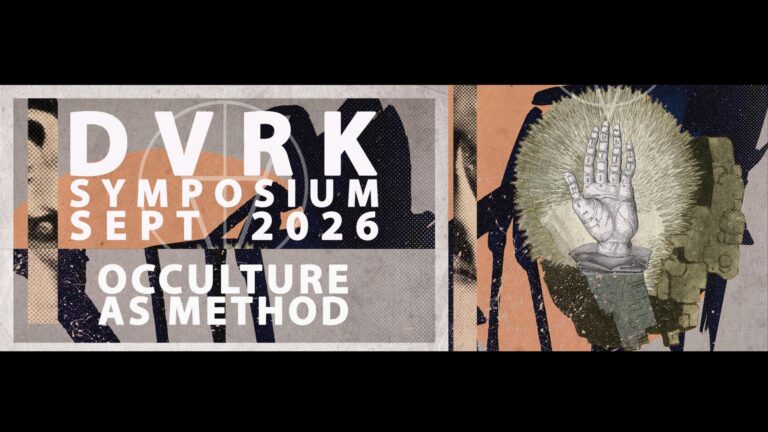
- Occulture as Method Symposium – September 2026
- Dr Rowan Williams, Professor Judith Butler and guests present Public Talks at Manchester Met
- Bunker Talks 2026-2027